



Material Handling Trends for 2026
Material handling is evolving faster than it has in decades. Customer demands mean businesses must move more product, more efficiently. And as safety and environmental standards continue to rise, so does the pressure across the industry, from warehouses and manufacturing plants to lumber yards and construction sites. These are the trends we’re watching in 2026.
Workforce-Driven Design
Labor shortages are one of the biggest forces shaping material handling today, pushing companies to rethink how work gets done. As a result, there is growing demand for equipment that is easier to operate, more ergonomic, and reduces operator fatigue. Modern forklifts, including Toyota’s latest electric and internal combustion models, feature intuitive controls, improved visibility, and advanced safety systems that help operators work more confidently.
Electrification
Broader availability of electric options is transforming fleets. Advances in battery technology, particularly lithium-ion, mean forklifts can handle harder jobs. Faster charging, consistent power, and lower maintenance make them a viable alternative to internal combustion trucks, which translates to lower operating costs, quieter facilities, and reduced emissions without sacrificing performance.
Advanced Safety Training
Safety and compliance remain central to material handling as forklift-related incidents drive greater focus on training, fleet monitoring, and facility design. Companies are investing in safety programs that go beyond basic certification to reduce injuries, downtime, liability, and insurance costs.

Data-Driven Fleet Management
Insight-based fleet optimization is gaining momentum as modern forklifts generate valuable operational data through telematics. Tracking usage, impacts, maintenance needs, and operator behavior helps businesses right-size fleets, target training, and plan maintenance more effectively. The result is improved uptime, longer equipment life, and smarter capital investments.
Warehouse Automation
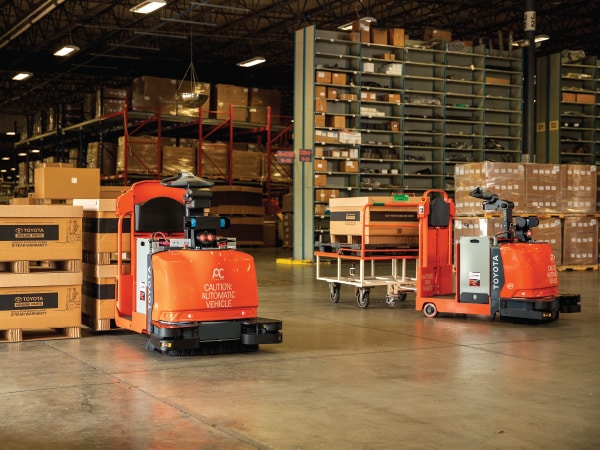
Automation is increasingly part of material handling, with automated guided vehicles (AGVs) and autonomous forklifts handling repetitive, predictable tasks like pallet movement and line feeding. With strategic deployment, automation can be a powerful tool, especially for operations facing labor shortages.
While the material handling industry will continue to evolve, the goal remains the same: moving products safely, efficiently, and reliably. Companies that stay informed and work with a trusted partner will be best positioned to adapt, whatever the next shift brings.
These trends will impact everything from equipment selection to facility design in the coming year. As one of the nation’s largest Toyota forklift dealers with decades of experience, Shoppa’s partners closely with customers to understand their challenges and deliver solutions that work today and scale for the future.
