Every year, the cotton harvest season in West Texas brings a sharp increase in equipment demand. Cotton gins work longer hours with much less room for equipment downtime.
The existing forklift or fleet — critical for transporting cotton bales to and from gins — may struggle to support peak season without slowing production.
For operations in Lubbock, Amarillo, and across West Texas, seasonal planning should start with three questions: Do you have enough trucks? Do you have the right attachments? And can you get support quickly when something changes?
Identify where your fleet may fall short
Before ginning season begins, review how equipment moves through the operation from unloading to storage and shipment. Look for areas where one truck is supporting multiple jobs or where a breakdown would stop work entirely.
Common pressure points during cotton season include:
- Unloading incoming materials
- Moving cotton bales through the yard
- Staging bales for storage or shipment
- Loading outbound trailers
- Supporting cleanup and maintenance work
- Covering for equipment that is already operating at full capacity
This review can help determine whether you need another forklift for the entire season or only during the busiest weeks of the cotton harvest.
Use forklift rentals to add capacity quickly
A forklift rental can help a cotton gin respond to seasonal demand without purchasing equipment that may sit underused after harvest.
Forklift rentals in West Texas can be especially useful when operations need to:
- Supplement an existing fleet during peak season
- Replace a truck that is down for service
- Add capacity for a larger-than-expected crop
- Support an additional shift
- Test a different truck or attachment configuration
The right rental period depends on expected volume, operating hours, and how long the gin anticipates running at full capacity. Some operations may need equipment for several months, while others may need a truck for a shorter production window.
Harvest Hint: Shoppa’s has diesel forklifts arriving in Lubbock and Amarillo to rent in time for ginning season, with flexible terms designed around seasonal demand.
Match the forklift to outdoor harvest conditions
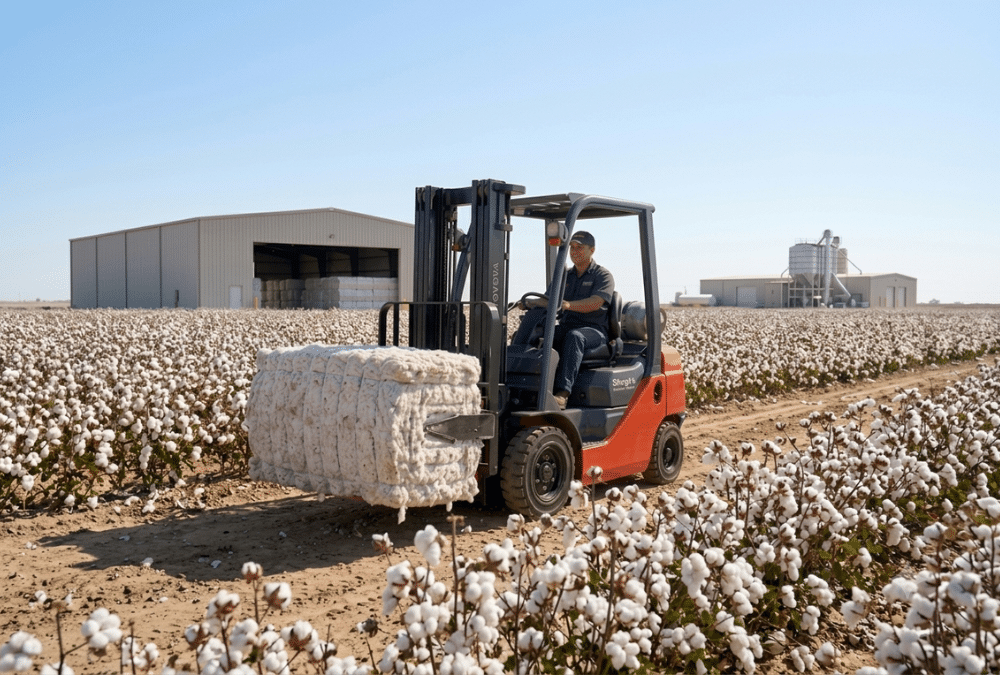
Cotton operations often require forklifts to travel across gravel, dirt, and uneven yard surfaces, which makes the equipment configuration as important as the number of trucks available. Diesel pneumatic forklifts are designed for demanding outdoor work. Diesel engines provide the torque needed to move heavy loads and maintain performance across rough surfaces. Pneumatic tires can also provide better traction and ground clearance than trucks designed primarily for smooth indoor floors.
Toyota’s return to the diesel forklift market gives West Texas operations another option for outdoor applications. Its Core Diesel Pneumatic Forklift is designed to combine diesel performance with features that support operator control, equipment visibility, and fleet management.
When adding a forklift to your fleet or evaluating a forklift rental in West Texas, consider:
- Surface and yard conditions
- Required lifting capacity
- Travel distance
- Hours of daily operation
- Trailer and loading dock height
- Available fueling
- Operator visibility and comfort
A truck that performs well inside a warehouse may not be the right fit for a cotton yard.
You can rent forklift attachments, too
The forklift is only one part of the setup. Forklift attachments help determine how safely and efficiently the load can be handled.
Bale clamps are commonly used during cotton harvest, depending on the type of bale, wrapping, storage method, and handling process. Adding an attachment can affect how much weight the truck can safely lift. It can also change the load center and visibility from the operator’s seat. Make sure you work with a material handling expert to select an attachment that is appropriate for the load and the forklift’s rated capacity.
Harvest Hint: Shoppa’s rents bale clamps with forklifts or as standalone attachments, giving customers the flexibility to supplement trucks they already own.
Plan for delivery, service, and backup equipment
Equipment availability alone does not guarantee uptime. Peak season planning should also account for what happens if a truck needs maintenance or demand changes unexpectedly. Ask potential rental providers:
- How quickly can equipment be delivered?
- Is service available locally?
- Are replacement trucks available?
- Can the rental period be extended?
- Are compatible attachments in stock?
- Who helps confirm the truck and attachment are properly matched?
Harvest Hint: Shoppa’s supports cotton operations from its Lubbock and Amarillo locations and offers same-day forklift rental and/or next-day rental delivery in most cases. Local equipment, service, and attachment support can help reduce delays when every hour matters.
Build flexibility into your harvest plan
Weather, crop volume, labor availability, and equipment performance can all change the demands on a rental fleet. It is Texas, after all — cotton season does not always follow the forecast.
The best harvest season plan will include enough flexibility to add a truck, extend a forklift rental, or swap out an attachment as needs evolve. Reviewing fleet capacity before ginning season starts and securing your West Texas forklift rentals in early will help your cotton gins keep bales moving.
Learn more about rentals from Shoppa’s