



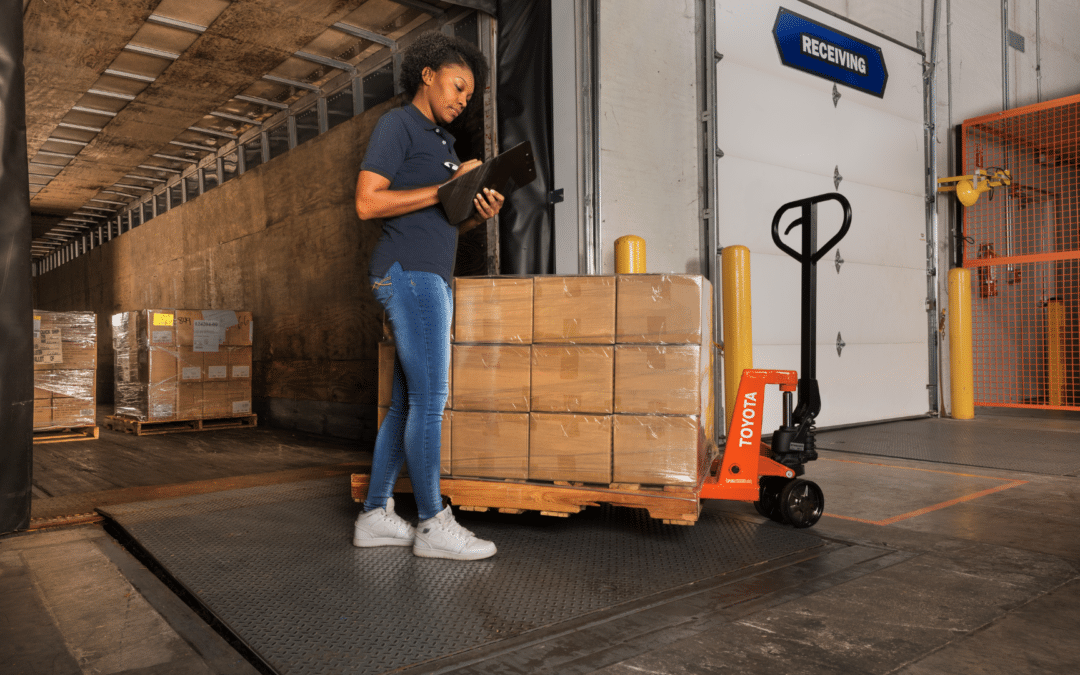
Working with the wrong material handling equipment can slow your operation down and add unnecessary cost. But how do you choose between pallet jacks, walkie stackers, and order pickers? Which piece of equipment is right for your operation? It depends on how your operation runs. Whether you’re planning a new facility, re-evaluating equipment needs, or looking for ways to improve throughput, here’s how to pick the right piece of equipment for the job.
Pallet jacks: Floor flow for short moves
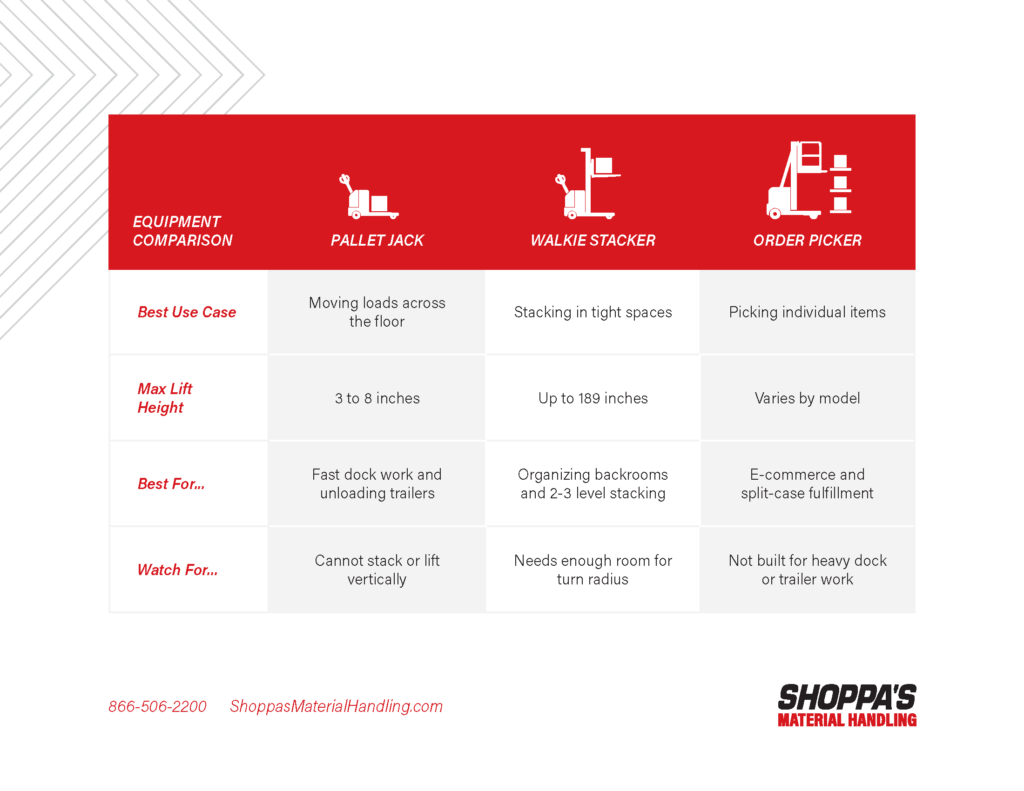
Pallet jacks are the go-to choice for horizontal speed. They’re the workhorses of any loading dock. If you need to move a pallet quickly from one point to another across the floor, this is where you start.
- What you’re moving: Full pallets, not individual items
- Distance: Short, repetitive trips (dock to staging, trailer unloading)
- Height: Floor-level only (no stacking)
- Space: Tight areas like trailers, staging zones, and backrooms
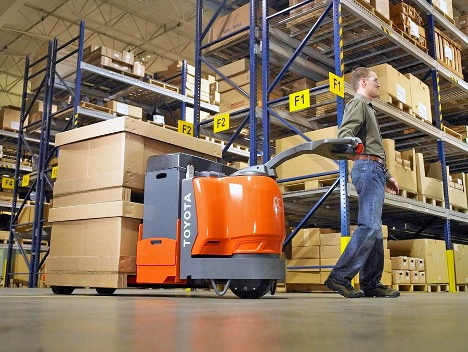
Pallet jacks are the most affordable of the equipment options, and since they only lift a load a few inches off the ground, they are easy to learn and operate. But this also means they can’t help stack inventory.
Pallet jacks come in a range of configurations, from manual models to electric walkie pallet jacks and rider models designed for higher throughput. Shoppa’s can help you choose the right pallet jack for your operation.
Walkie stackers: Add storage in tight spaces
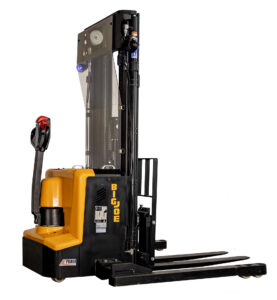
When you start running out of floor space and you need to go vertical, the walkie stacker is your next step. These machines are essentially pallet jacks with a mast that allows them to lift and stack.
- What you’re moving: Full pallets
- Distance: Short to moderate (not ideal for long travel)
- Height: Light stacking (typically 2–3 levels)
- Space: Narrow aisles or areas where forklifts don’t fit
Most standard stackers, including many Big Joe and Toyota models, handle a lifting capacity ranging from 2,000 to 4,000 pounds and can reach heights up to 189 inches. They are perfect for organizing backrooms or replenishing shelves. But measure your turn radius before you commit, as walkie stackers are meant for narrow spaces where a full–sized forklift is too bulky.
Not all material handling equipment is the same
Pallet jacks and walkie stackers are a warehouse or distribution center’s entry-level material handling equipment for moving bulk inventory from one point to another. What happens at the next step — order fulfillment?
Order pickers: Built for precision, not pallets
Order pickers serve a very different purpose from bulk pallet movers. Instead of lifting the pallet, the machine lifts the operator up to the product. This is essential for split-case picking (selecting individual items rather than full pallets) to fulfill orders.
- What you’re moving: Individual items (split-case picking)
- Distance: Travel within picking aisles
- Height: Multiple rack levels
- Space: Structured aisles designed for picking path
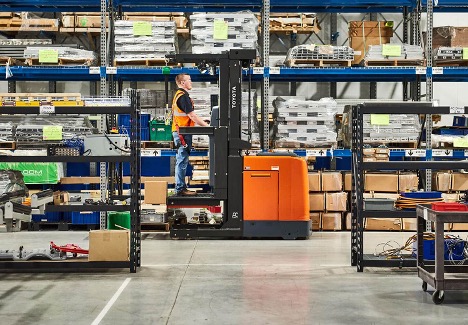
While order pickers are essential in high-SKU environments, they aren’t meant for unloading or receiving. Rely on order pickers to reach your highest racks and navigate narrow aisles without pulling down a whole pallet.
Tips for purchasing material handling equipment
Before you sign a purchase order, ask yourself a few final questions to make sure you avoid common mistakes:
- Does the equipment fit your space? If it can’t turn cleanly in your aisles, it will bottleneck your operation.
- Are you trying to make one piece of equipment do everything? Using pallet-moving equipment for picking, or vice versa, can make productivity plummet.
- Are you solving real problems? What looks efficient on paper should match what your operators actually do — now and in the near-term.
When you match material handling equipment to how your warehouse really runs, you’ll see real operational improvements.
Don’t decide alone. The material handling experts at Shoppa’s can help you make an informed decision about your operation’s needs. Contact us to set up a complementary site assessment.