



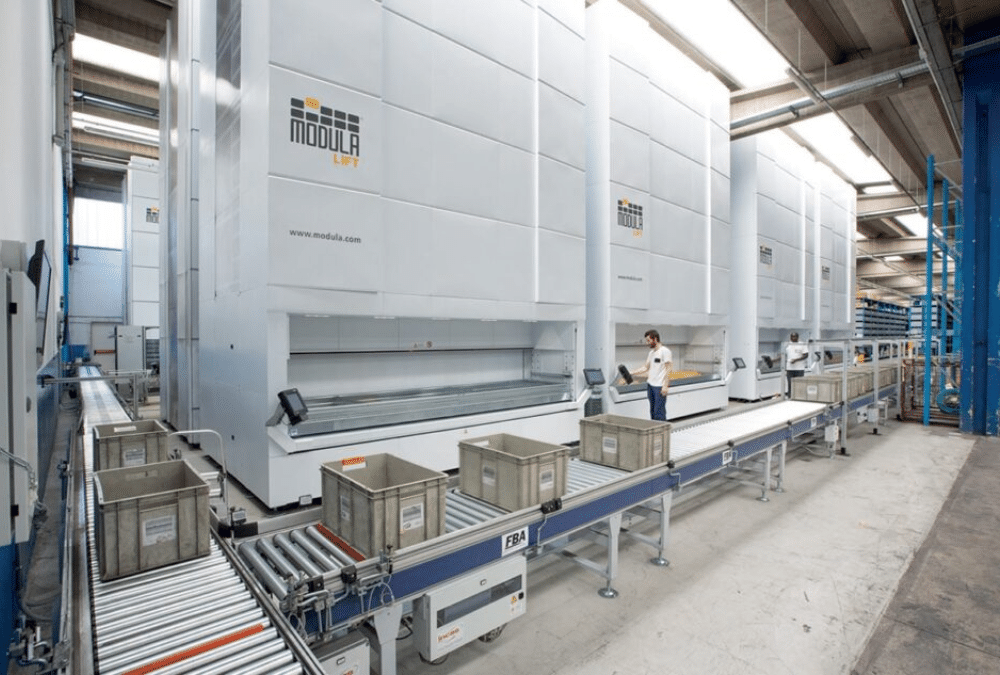
Many operations leaders assume warehouse automation means a major overhaul. But vertical storage systems like Modula’s vertical lift modules (VLMs) are often much simpler than expected. For many warehouses, they are a practical first step toward improving space utilization, picking efficiency, and inventory organization.
How do you know if vertical storage is a fit for your operation? If any of these situations sound familiar, vertical storage may be worth exploring.
You’re Running Out of Space
If your warehouse is crowded but you still have unused overhead space, vertical storage can help you reclaim floor space without expanding or relocating. Operations can recover up to 90% of their storage footprint by moving inventory upward instead of outward.
You Rely Heavily on Shelving
Vertical lift modules work especially well for small- to medium-sized parts, tools, MRO inventory, and components stored on shelving or in bins. Operations with large shelving areas often see the fastest gains in organization, storage density, and accessibility.
Your Employees Spend Too Much Time Walking
Walk time can make productivity plummet when team members spend most of their time searching aisle after aisle for parts, tools, or inventory. The goods-to-person-inspired design of VLMs delivers items directly to the operator at the most ergonomic height. Modula’s VLMs reduce walk time for parts by up to 90% compared to static shelving. Employees also stay firmly planted on the ground as the VLM brings items to them — no carrying boxes up or down ladders.
You’re Still Using Manual or Paper-Based Picking
Many small and mid-sized operations still manage inventory with spreadsheets and/or paper pick lists. Since a vertical lift module can operate as a standalone solution, companies can improve storage and picking workflows without implementing a full warehouse management system on day one.
You Need to Improve Efficiency Without Adding Headcount
As labor shortages continue, many companies are looking for ways to improve throughput with the teams they already have. Vertical storage can help by improving picking accuracy, increasing workforce productivity by up to 85%, and creating a more organized workflow inside the same footprint.
You Need a Practical Starting Point for Automation
Automation does not have to happen all at once. Many Shoppa’s customers have started with a single Modula unit, seen the benefits, and expanded over time. Teams learn the system quickly, and installations are often completed quickly with little to no downtime. VLMs also offer flexible integration with conveyors and existing systems or future automation plans.
Questions Worth Asking Before Adding More Shelving
Before investing in more storage or expanding into a larger building, consider:
- How much floor space is being lost to shelving?
- How much time is spent walking to pick inventory?
- Could reclaimed space support additional production, pallet storage, or revenue-generating operations?
- Would faster picking improve throughput or customer response times?
- Could a small automation project solve the immediate problem without a full warehouse redesign?
Sometimes the best way to create more space is to use the space you already have.
At Shoppa’s, we help operations automate what matters to achieve optimal results. We also provide factory trained service and technical support for even the most advanced equipment.
If you’re ready to move up to a VLM or just explore the possibility of vertical storage, contact us.